Quick Summary
- Strategic Alliance: SK Telecom has spearheaded a national consortium alongside AI startup Upstage, joining forces with top universities to build Korea’s first localized cyber defense AI foundation model.
- Real-World Automation: The specialized model targets Security Operations Centers (SOCs) handling up to 10,000 daily alerts, transforming passive incident logging into active, autonomous threat neutralization.
- National Security Sovereignty: By blending SKT’s 519B+ parameter A.X K-series LLMs with Upstage’s Solar Open architecture, the initiative ensures local data compliance while protecting critical sovereign infrastructure.
A Sovereign Shield for Digital Infrastructure
Cybersecurity operations worldwide are facing an unsustainable workload. Modern enterprise security teams are overwhelmed by a relentless tide of security alerts, often sorting through thousands of potential threats each day. This constant pressure reduces analysts’ time for proactive defense and incident prevention.
Furthermore, the surge in detections complicates incident response and limits strategic improvements. In many organizations, teams struggle to triage alerts efficiently, leaving gaps in coverage and slowing recovery times. This approach, sk telecom AI, demonstrates how focused automation and orchestration can help teams scale operations, prioritize real threats, and free analysts to work on long-term defense.
In South Korea, telecommunications giant SK Telecom (NYSE: $SKM @ $39.80) is taking a decisive step to solve this operational bottleneck. The telecom titan has officially assembled an elite AI security team aimed at constructing a specialized cyber defense foundation model.
By unifying corporate operational data with cutting-edge artificial intelligence, SKT is moving beyond standard software tools. The goal is simple yet ambitious: engineer an autonomous defensive shield that can interpret, intercept, and eliminate cyberattacks in real time.
The Crisis Inside Security Operations Centers
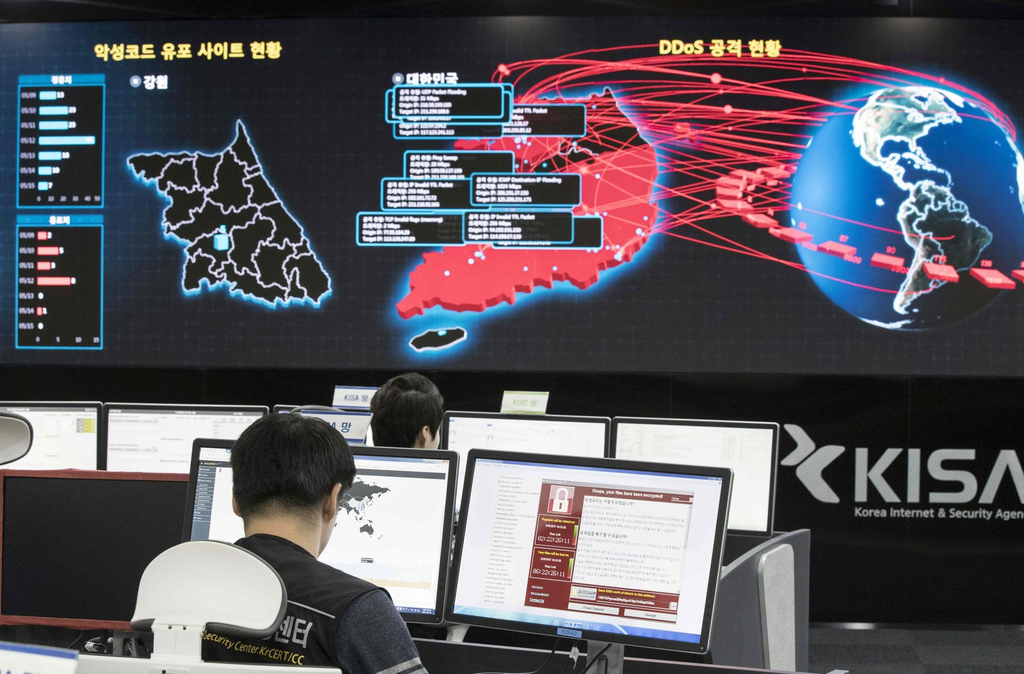
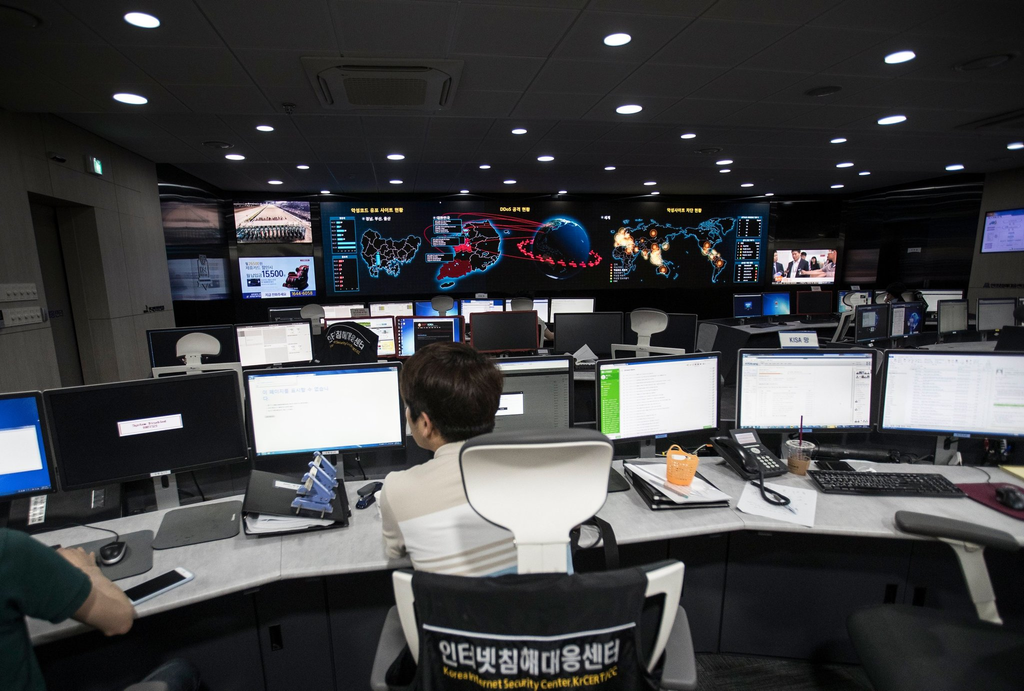
Modern enterprise Security Operations Centers (SOCs) are broken under the weight of hyper-connected infrastructure.
Additionally, a single enterprise network can generate 10,000 raw threat alerts in a 24-hour window with sk telecom AI.
Human security analysts cannot inspect every anomaly without suffering extreme fatigue. This fatigue leads directly to missed indicators of compromise and delayed incident responses.
- Alert Fatigue: SOC teams routinely abandon low-severity alerts, creating massive blind spots that sophisticated attackers easily exploit.
- Skill Shortages: The global shortage of certified cybersecurity engineers makes scaling human-only analysis teams financially impossible.
- Response Delays: Manual threat triaging turns what should be a 5-second isolation task into an hour-long investigation.
- Localized Context Void: Existing western security tools lack granular understanding of regional digital ecosystems and localized regulatory mandates.
The Architecture: Full-Stack Sovereign Defense
To tackle this systemic challenge, SK Telecom isn’t working in isolation. The company has orchestrated a multi-institutional consortium that combines industry practice with academic validation.
The primary technological partner in this endeavor is Upstage, one of East Asia’s premier generative AI pioneers. Together, SKT and Upstage are fusing their proprietary model lines to create a domain-tailored intelligence engine.
- Core Models: The foundation merges SKT’s massive A.X K-series language models with Upstage’s lightweight, high-performance Solar architectures.
- Practical Training: The unified model is trained directly on real-world incident telemetry provided by SKT’s Chief Information Protection Officer (CISO) division.
- Academic Verification: Korea University and Soongsil University are providing independent audits to verify both performance metrics and model safety.
- Industry Deployment: The Korea Information Protection Industry Association (KISIA) will manage the technology transfer across private sector networks.
From Passive Logging to Autonomous Agents
The new sk telecom AI cyber defense model shifts security philosophy from reactive logging to active mitigation.
Moreover, standard legacy tools notify human operators when a policy is breached; autonomous agents act instantly.
Specialized AI agents are integrated directly into network routers, cloud gateways, and endpoint security agents.
As a result, the system achieves sub-second reaction times.
- Intelligent Threat Triage: AI agents ingest raw logs, cross-reference historical threat intelligence, and dismiss false positives automatically.
- Contextual Anomaly Detection: The model recognizes subtle multi-stage attack patterns that traditional signature-based tools miss entirely.
- Automated Containment: Upon verifying a breach, the agent instantly revokes user tokens, updates firewall rules, and isolates compromised endpoints.
- Generative Incident Reports: Security leads receive complete, human-readable postmortem analysis reports formatted instantly by the LLM.
Why Sovereign Security AI Matters
Data sovereignty has quickly become a critical pillar of national security, shaping how governments govern sensitive data. It concerns where information is stored, who can access it, and how it is protected against external pressures. Strong data governance supports trust, resilience, and lawful oversight across critical sectors.
Relying on cross-border cloud platforms for threat analysis risks exposing sensitive government, defense, and telecommunication log structures to foreign jurisdiction, potentially compromising operations. To preserve national security, operations should favor domestic or carefully governed data ecosystems. This reduces exposure and strengthens control over sensitive telemetry and incident records.
SKT’s initiative aligns directly with South Korea’s broader national mission to maintain sovereign AI autonomy. By ensuring the foundation model is developed, trained, and hosted locally, critical infrastructure remains completely isolated from external surveillance risks.
| Metric / Dimension | Traditional Global Security Tool | SKT Sovereign Defense Model |
| Data Residency | Cross-border cloud processing | 100% On-premise / Local Cloud |
| Language Optimization | Primary English / Translated | Native Korean Threat Context |
| Regulatory Alignment | Generic NIST / ISO frameworks | Direct alignment with K-ISMS & CSAP |
| Response Time | Manual Analyst Triage (1-4 hours) | Autonomous Agent Containment (< 5 seconds) |
| Infrastructure Integration | External Plugin API | Native Telecom & GPUaaS Pipeline |
Strategic Financial Positioning and Market Impact
For institutional investors, SKT’s pivot into enterprise-grade security AI represents a powerful expansion of its high-margin B2B service portfolio. Telecom providers historically operated as pipeline utility providers, but AI transformation (AX) allows SKT to capture significant enterprise value.
By monetizing its sovereign AI infrastructure (GPUaaS) and selling verticalized cybersecurity solutions to financial institutions, defense sectors, and government agencies, SKT is diversifying beyond core wireless connectivity.
- Expanding Enterprise Revenue: B2B cybersecurity and sovereign AI deployments carry higher margin profiles than legacy telecommunications plans.
- Valuation Re-rating: Tech-enabled telcos building proprietary AI foundation models command higher market multiples than standard utility operators.
- Cost Efficiency: Automated internal SOC operations reduce SKT’s own overhead while enhancing network resilience against destructive breaches.
The Broader Ecosystem: Telecommunications Meets Defense
This AI security push follows a series of high-level government collaborations. SK Telecom recently signed a landmark Memorandum of Understanding (MOU) with South Korea’s Ministry of National Defense to apply sovereign AI models to military administration and defense networks.
The cross-pollination between public defense projects and private sector cybersecurity creates a formidable competitive moat. Lessons learned in defending military infrastructure directly inform the algorithms guarding corporate databases, retail banking networks, and mobile networks.
Key Technological Milestones on the Horizon
The development pipeline for the joint SKT-Upstage model follows a strict multi-stage validation schedule monitored by academic and industry auditors:
- Phase 1: Data Curation & Lightweighting (Q3 2026) — Aggregating anonymized SOC logs, threat telemetry, and compliance guidelines into optimized datasets.
- Phase 2: Fine-Tuning & Red Teaming (Q4 2026) — Subjecting A.X K-series models to simulated cyberwarfare scenarios to eliminate hallucinations and secure model weights.
- Phase 3: Pilot Deployment in Public Sector (Q1 2027) — Validating performance inside real security operations centers across public and military administration networks.
- Phase 4: Commercial Expansion (Mid 2027) — Rolling out standardized B2B security platforms to financial institutions, enterprise partners, and international clients.
Challenges and Risk Considerations
While the strategic value is clear, executing a nation-scale AI security rollout is not without technical hurdles:
- Adversarial AI Attacks: Bad actors actively attempt to poison model training data or use prompt injection to bypass automated security agents.
- Hardware Supply Constraints: Scaling high-parameter models requires continuous access to cutting-edge GPU clusters and high-bandwidth memory.
- Zero-Day Vulnerabilities: An AI trained purely on historical attack logs must prove its ability to extrapolate and stop novel, never-before-seen exploits.
Opportunity Window 🏆
The launch of SK Telecom’s dedicated AI security team marks the opening of a lucrative multi-year trend for forward-thinking investors and tech professionals.
- Capitalize on B2B Cyber Transformation: As enterprise SOCs shift from manual monitoring to autonomous AI models, software providers specializing in security data pipelines, GPU infrastructure, and model auditing will experience explosive growth.
- Career Positioning: Demand for professionals who understand the intersection of generative AI, large language model red-teaming, and network security will far outpace traditional IT roles over the next decade.
- Investment Moats: Look for cybersecurity platforms and telecommunications companies that possess exclusive access to proprietary operational data—these assets form unassailable moats that generic AI vendors cannot replicate.
Who did what today? 📈
- SK Telecom Co Ltd (NYSE: $SKM @ $39.80)Assembled a dedicated AI security consortium to build a sovereign cyber defense foundation model for enterprise and national security applications.
- Microsoft Corporation (Nasdaq: $MSFT @ $412.50)Expanded its enterprise Copilot for Security features, signaling intensifying global competition in the autonomous SOC automation market.
- Palo Alto Networks Inc (Nasdaq: $PANW @ $345.20)Announced expanded partnership integrations for platformed threat intelligence engines across Asian telecom infrastructure.
- CrowdStrike Holdings Inc (Nasdaq: $CRWD @ $268.90)Rolled out updated endpoint detection agents designed to ingest real-time telemetry logs for lightweight, on-device AI triaging.