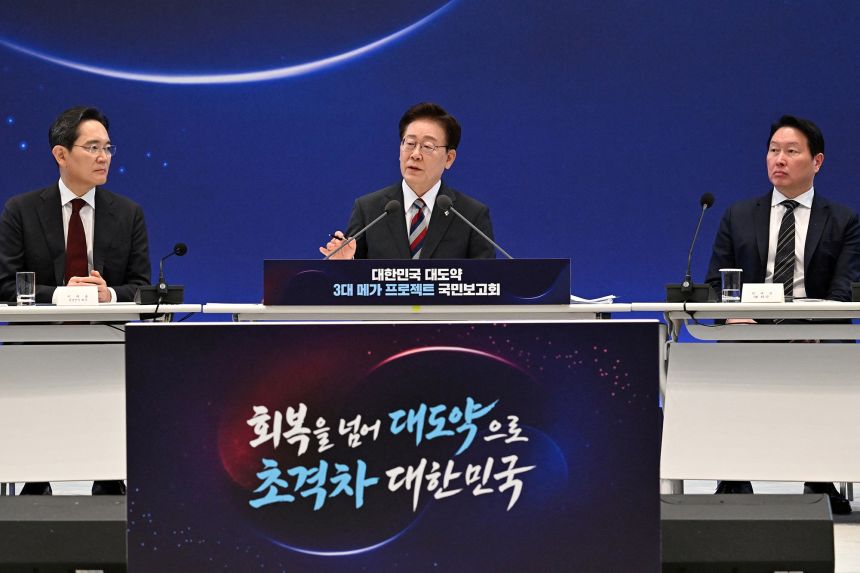
Quick Summary
- SK Hynix will begin mass-producing next-gen HBM4E AI chips at its new Indiana facility in Q3 2029 .
- CEO Kwak Noh-Jung predicts the current memory chip shortage will persist through the end of 2030 .
- The $4 billion+ project, backed by U.S. CHIPS Act funding, aims to bring AI memory production closer to major clients like Nvidia and Microsoft .
“Made in USA” HBM Chips on the Horizon
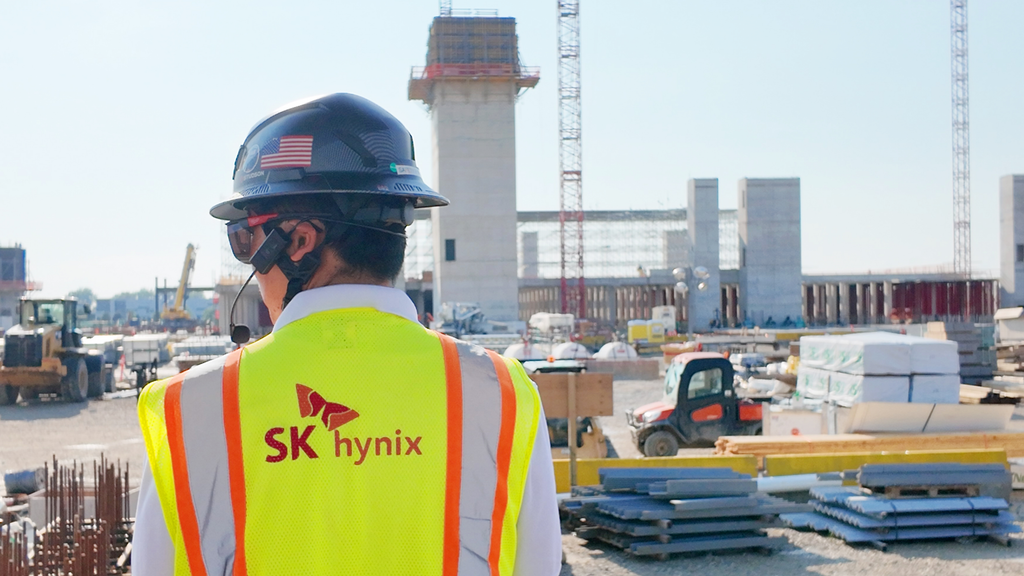
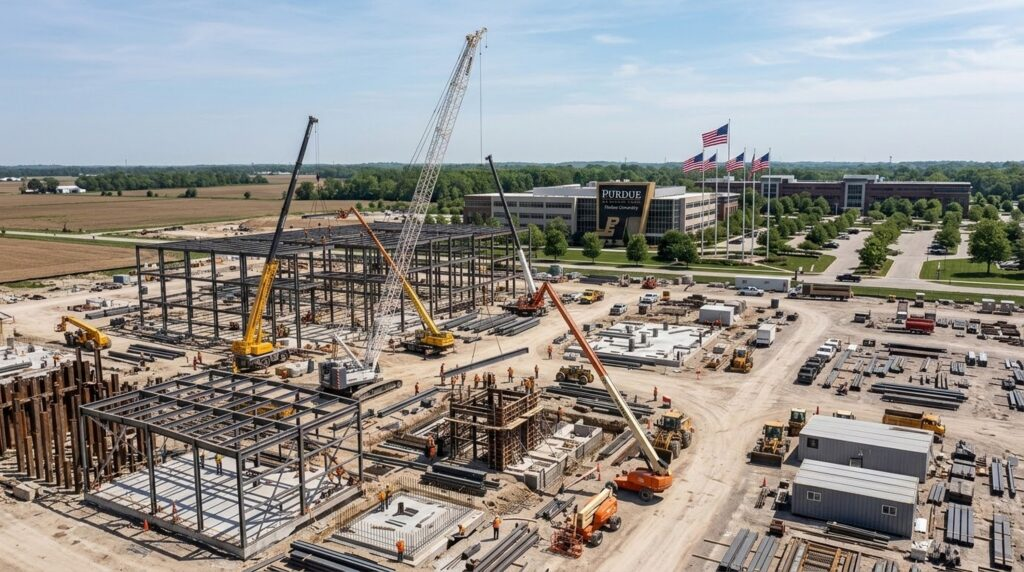
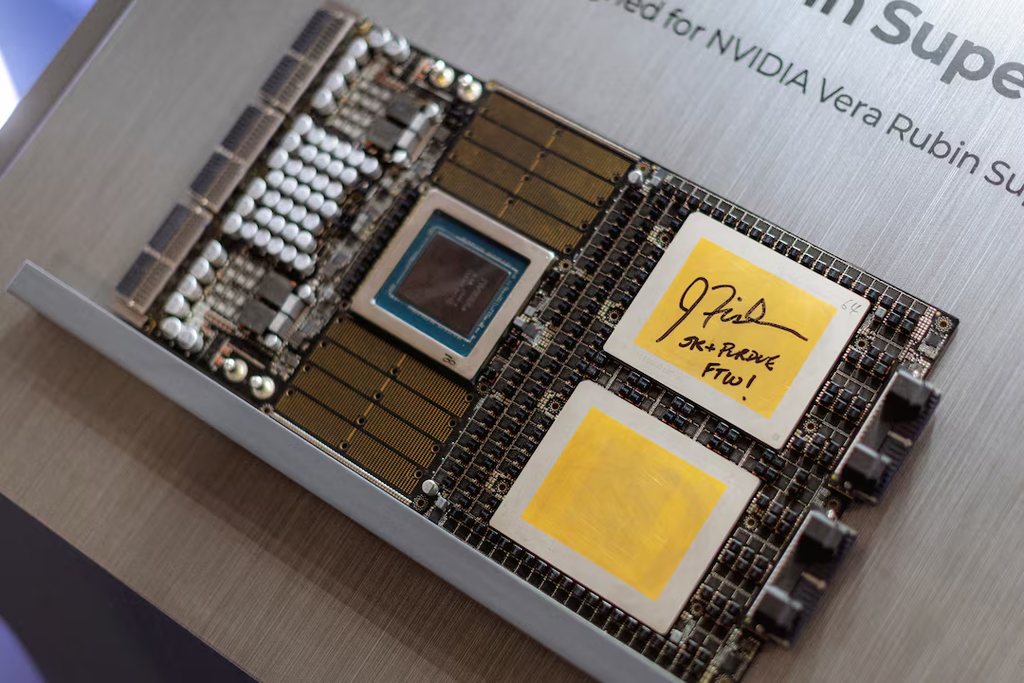
WEST LAFAYETTE, Indiana – South Korean chipmaking giant SK Hynix officially broke ground this week on its first-ever U.S. advanced packaging facility, a strategic move that will see next-generation AI memory chips roll off American production lines starting in 2029 .
At a ceremony held at Purdue University, CEO Kwak Noh-Jung confirmed that volume production of the company’s cutting-edge HBM4E chips is scheduled for the third quarter of 2029 at the West Lafayette site .
But the bigger headline for the semiconductor industry? Kwak declared that the current memory chip shortage shows no signs of easing and will likely persist through the end of 2030 .
This isn’t just another factory opening—it’s a strategic pivot. By establishing a beachhead in the U.S., SK Hynix is moving to secure its dominance in the high-bandwidth memory (HBM) market while answering Washington’s call for domestic chip production.
Indiana: The New Frontier for AI Memory
A $4 Billion Bet on American Soil
The facility, located within the Purdue Research Park, represents an investment exceeding $4 billion . It’s more than just a packaging plant; it will house:
- A next-generation HBM packaging line
- An AI semiconductor R&D facility
- A state-of-the-art cleanroom scheduled to begin operations in the second half of 2028
Kwak envisions the site eventually reaching an annual capacity of hundreds of thousands of wafers, making Indiana a “key HBM production base in the United States” by 2030 .
The “Korea-U.S. Production Triangle”
Here’s the smart play: The Indiana plant won’t manufacture chips from scratch. Instead, advanced wafers produced in South Korea will be shipped to Indiana for packaging and testing before being delivered to U.S. customers .
This hybrid model creates an efficient supply chain while capitalizing on U.S. incentives and proximity to customers .
Why the Memory Shortage Will Outlast the Decade
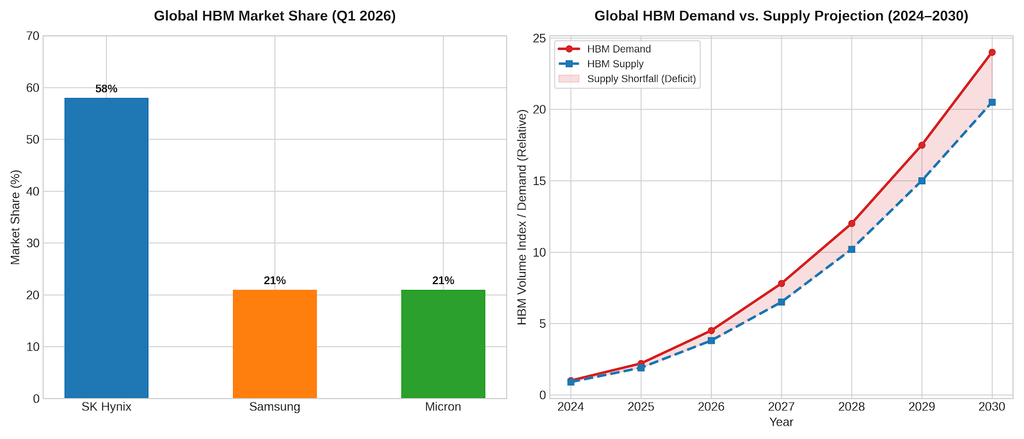
Kwak Noh-Jung didn’t mince words about the supply-demand imbalance. “We expect the supply shortage to continue until the end of 2030,” he told reporters .
The AI engine is simply too powerful. Data centers are multiplying. Training large language models demands HBM like never before. And unlike the cyclical downturns of the past, Kwak sees this as fundamentally different:
- Customized chips (like HBM) are replacing generic memory products
- Closer collaboration with AI customers means more predictable demand
- Any future slowdown will involve moderating demand, not a sharp collapse
By the Numbers: Market Dominance and Government Support
- 58% – SK Hynix’s share of the global HBM market by revenue in Q1 2026 (Counterpoint Research)
- 21% – Samsung Electronics and Micron Technology each hold 21%
- $458 million – U.S. government grants finalized under the CHIPS Act
- $500 million – Potential loans from the U.S. government
- $38.3 billion – SK Hynix’s broader investment plan through 2031, including second-phase construction in South Korea
Kwak also confirmed a 70% revenue jump forecast from major customer Nvidia for the next fiscal year, underlining the unabated AI boom .
Job Creation and Local Impact
7,000 Direct & Indirect Jobs
The Indiana project is expected to create approximately 7,000 local jobs directly and indirectly through the supply chain .
R&D Partnership with Purdue
SK Hynix signed a memorandum of understanding with Purdue University for advanced packaging R&D collaboration . This positions the facility as a talent magnet, drawing top semiconductor minds to the Midwest.
“We’re Open for More U.S. Investment”
When asked about potential additional U.S. facilities, Kwak left the door wide open: “If the region provides us with opportunities and resources, we are open to any region, any country,” he said .
This response comes amid pressure from the Biden administration for memory chipmakers to consider front-end fabrication (wafer production) in the U.S. .
Kwak suggested the business model has fundamentally shifted from mass-producing generic chips to co-developing customized products with clients . That gives SK Hynix the confidence to invest long-term.
“The next downturn will be different from what we’ve experienced over the past few decades.” — Kwak Noh-Jung, CEO, SK Hynix
Opportunity Window 🏆
How This Affects You
The memory shortage isn’t just a corporate problem—it’s a market signal.
- For Investors: The prolonged shortage means sustained pricing power for HBM leaders like SK Hynix. If you’re in AI or semiconductor ETFs, this reaffirms the long-term growth thesis .
- For Tech Professionals: 7,000 new jobs are coming to Indiana, plus R&D opportunities at Purdue. AI hardware engineers, packaging specialists, and supply chain experts are in high demand .
- For Businesses: AI infrastructure buildout will continue through 2030. Companies relying on high-performance computing should lock in supply agreements and watch for potential bottleneck relief only after the decade ends .
The next 4-5 years will define the AI hardware landscape. Position yourself accordingly.
Who did what today? 📈
Disclaimer: Stock prices are for illustrative purposes and based on approximate recent trading ranges. Always consult a financial advisor for investment decisions.