

Quick Summary
- China quietly acquired over 35 tons of physical gold during July through London’s over-the-counter market.
- According to Goldman Sachs estimates, this massive accumulation marks Beijing’s third-largest monthly bullion purchase since mid-2025.
- The subtle transaction strategy highlights an accelerating global push toward central bank reserve diversification away from sovereign paper debt.

The Silent Gold Rush in London
Global financial centers rarely witness moves of this scale executed with such quiet precision.
Goldman Sachs analysts recently revealed that China secured over 35 metric tons of gold in July alone.
Rather than making public announcements, the acquisition occurred via London’s over-the-counter (OTC) marketplace.
This hidden trading route allows institutional buyers to acquire massive quantities of precious metals without triggering instant market volatility.
It represents the nation’s third-largest single-month gold allocation since mid-2025.
Industry observers note that official figures released by central authorities often understate actual reserves.
By leveraging over-the-counter channels, sovereign entities secure competitive pricing before public markets adjust.
Why London OTC Markets Matter
The London OTC gold market serves as the primary backbone for global physical bullion settlement.
Unlike standard futures exchanges, over-the-counter trades consist of direct bilateral negotiations between major bullion dealers.
- Opaque Volumes: Trade sizes and counterparty names remain private until settled.
- Direct Liquidity: Institutional players access vast physical stockpiles stored in accredited London vaults.
- Minimal Market Impact: Buyers avoid driving up spot prices during the acquisition window.
Financial analysts closely track export figures and vault settlement balances to detect these institutional flows.
Goldman Sachs utilized advanced trade-flow monitoring and custom customs data algorithms to expose this transaction.
The data confirms that state-backed buyers are actively prioritizing real assets over paper equivalents.
Behind China’s Strategic Reserve Shift
China’s structural pivot toward precious metals is driven by long-term geopolitical and macroeconomic objectives.
For decades, Asian trade surpluses were primarily recycled into U.S. Treasury securities and Western government bonds.
However, recent shifts in foreign policy and global sanctions have altered risk management calculations.
- De-Dollarization Efforts: Reducing systemic dependency on foreign fiat currencies shields national balances.
- Inflation Hedging: Physical gold maintains intrinsic purchasing power against currency debasement.
- Reserve Protection: Sanctions freezing sovereign fiat assets elsewhere highlighted the necessity of unencumbered physical gold.
- Currency Support: A well-fortified gold balance sheet reinforces international confidence in local currency settlements.
By acquiring 35 tons in one month, Beijing continues building an unassailable financial foundation.
This systematic accumulation trend shows zero signs of cooling down in the coming fiscal quarters.

What Goldman Sachs Analytics Reveal
Goldman Sachs commodity research teams have consistently tracked global central bank buying behaviors.
Their proprietary estimates combine custom data, international trade reports, and London vault withdrawal records.
The firm’s recent commentary emphasizes that central bank demand remains a fundamental driver of gold prices.
- Surging Sovereign Demand: Central banks globally now account for over 20% of annual physical gold consumption.
- Off-Market Accumulation: Unreported purchases frequently double official central bank survey disclosures.
- Long-Term Price Floor: Institutional buying creates an enduring floor under spot prices, even during high-interest-rate environments.
Wall Street strategists argue that this persistent official buying alters standard valuation models.
Traditional interest rate relationships no longer constrain precious metal appreciation as tightly as before.
The presence of sovereign buyers willing to absorb supply changes the baseline economics of global mining output.
The Broader Impact on Global Markets
When a sovereign balance sheet absorbs 35 tons in 30 days, global supply dynamics adjust rapidly.
Commercial banks, exchange-traded funds (ETFs), and private investors must compete for remaining liquid supplies.
Mining companies are finding it difficult to keep pace with this accelerating institutional appetite.
- Exploration Deficit: Annual discovery rates for major new gold deposits remain near multi-decade lows.
- Refining Constraints: Specialized refiners face tight scheduling when producing institutional 400-ounce bars.
- Vault Tightness: Physical bar availability across major clearing vaults in London and Zurich continues tightening.
As institutional liquidity drains into central bank vaults, market sensitivity to supply shocks increases.
Retail investors and wealth managers are taking notice of this ongoing structural tightening.
Sovereign appetite effectively converts paper liquidity into permanent physical reserves.
Comparing Historical Purchase Cycles
To appreciate the scale of July’s 35-ton purchase, one must examine recent historical benchmarks.
Since mid-2025, China’s monthly acquisition pace has fluctuated based on macro volatility.
- Mid-2025 Peak: Sovereign purchases briefly touched record monthly levels during global credit adjustments.
- Late-2025 Consolidation: Accumulation slowed temporarily as spot prices tested new record highs.
- July 2026 Resurgence: The 35-ton surge represents a powerful return to aggressive reserve expansion.
This historical comparison illustrates that central bank buyers treat price pullbacks as aggressive buying windows.
Rather than chasing momentum, institutional desks buy methodically on market dips or through negotiated OTC blocks.
Their steady discipline creates a recurring structural bid beneath precious metal markets worldwide.
How Institutional Investors View the Move
Asset managers and hedge funds closely monitor sovereign reserve disclosures for portfolio allocation signals.
When major central banks reallocate reserves into gold, asset managers re-evaluate traditional 60/40 investment portfolios.
Precious metals are increasingly treated as essential risk mitigation assets rather than simple speculation vehicles.
- Portfolio Diversification: Adding hard assets reduces total portfolio correlation during systemic stress.
- Capital Preservation: Institutional money seeks non-counterparty assets free of default risk.
- Macro Positioning: Fund managers align portfolios with long-term macroeconomic structural shifts.
The institutional consensus confirms that central bank gold accumulation represents a secular trend.
Investors who track institutional flows often adjust their asset allocation models accordingly.
As sovereign balance sheets transform, private capital frequently follows the same structural trail.
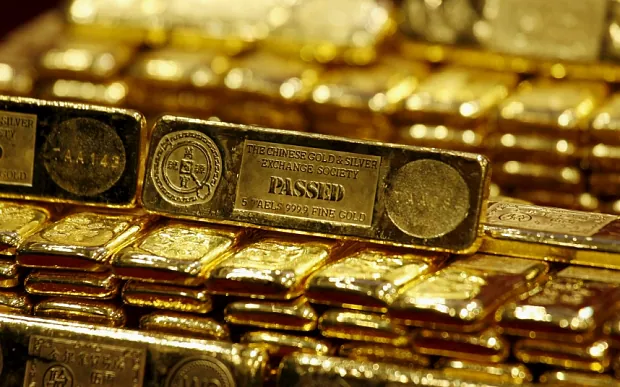
Opportunity Window 🏆
The stealthy purchase of 35 tons of physical gold by sovereign entities signals a profound shift in global wealth preservation strategies. For individual investors and private wealth managers, this structural buying trend creates a unique strategic window.
- Ride the Institutional Floor: Central bank buying provides a robust long-term floor for gold prices, offering private investors a tailwind for hard-asset allocations.
- Precious Metal Equities: Gold mining and streaming companies often experience operating leverage and expanded profit margins as underlying bullion prices stay elevated.
- Diversification Blueprint: Mirroring institutional playbooks by allocating a portion of capital into physical bullion, gold ETFs, or mining royalties helps shield personal wealth against currency volatility.
Staying ahead of official announcements by monitoring OTC market data allows investors to position capital effectively before broader retail markets catch on.
Who did what today? 📈
Major market players and institutional leaders made key strategic moves across global markets:
- Goldman Sachs Group Inc. (NYSE: $GS @ $512.40) released a groundbreaking commodities report detailing China’s massive 35-ton over-the-counter gold acquisition.
- SPDR Gold Shares (NYSEARCA: $GLD @ $238.15) experienced increased net inflows as institutional investors adjusted portfolios following OTC flow reports.
- Barrick Gold Corporation (NYSE: $GOLD @ $19.85) advanced capital investment plans for key expansion projects amid rising physical demand from central banks.
- Franco-Nevada Corporation (NYSE: $FNV @ $128.50) highlighted strong royalty revenues linked to elevated global gold realizations and steady mine production.
- JPMorgan Chase & Co. (NYSE: $JPM @ $215.30) expanded its physical metals vault operations in London to accommodate growing demand for institutional clearing services.